
Mango Sticky Rice – From Thai Inspiration to Vietnamese Dessert Culture
Mango sticky rice is one of Southeast Asia’s most recognizable desserts, celebrated for its vibrant colors, tropical aroma, and satisfying contrast of textures. Though deeply rooted in Thailand, mango sticky rice has traveled beyond its borders and found a welcoming home in Vietnam’s dynamic dessert culture. Today, it stands not only as a sweet dish but as a culinary bridge connecting two neighboring food traditions. This article explores how mango sticky rice evolved from a Thai seasonal specialty into a Vietnamese dessert embraced in Vietnam, examining its components, cultural role, and modern reinterpretations.
The Thai Origins of Mango Sticky Rice
Mango sticky rice originated in Thailand, where glutinous rice has long been a staple in both savory and sweet dishes. In central Thailand, coconut milk-based desserts are common, reflecting the country’s abundant coconut palms and tropical climate. When sweet ripe mangoes are in season—typically during the hot months—Thai cooks began pairing them with coconut-infused sticky rice, creating a dessert that celebrates freshness and balance.
The Thai name for mango sticky rice, khao niao mamuang, directly describes its components: sticky rice and mango. The dish became especially popular in central Thailand, including Bangkok and surrounding provinces, where premium mango varieties flourish. Over time, it evolved from a home-prepared seasonal treat into a national dessert icon.
Thai cuisine values harmony—balancing sweetness, saltiness, richness, and aroma. Mango sticky rice perfectly reflects this philosophy. The creamy sweetness of coconut milk is enhanced by a hint of salt, while the juicy mango provides brightness and acidity. The result is a dessert that feels indulgent yet refreshing, particularly in Thailand’s warm climate.
4 Components to Thai Mango Sticky Rice
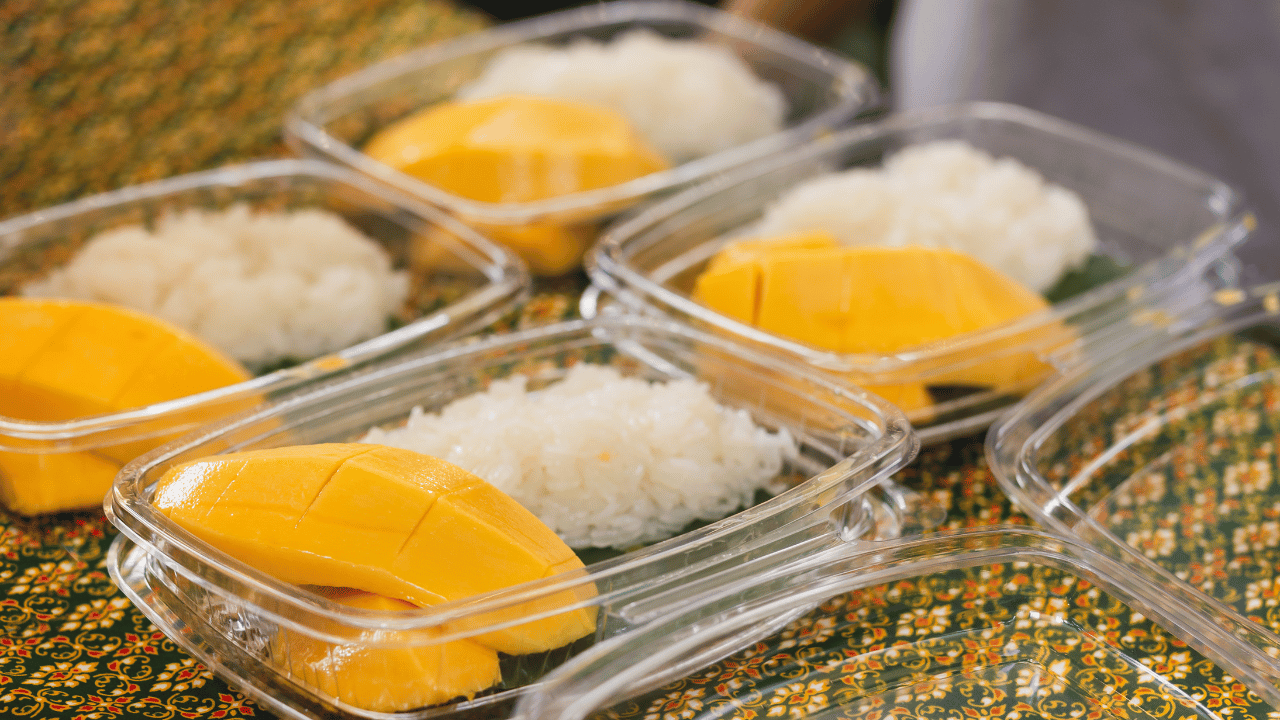
Although mango sticky rice appears simple, its appeal lies in the harmony of four essential components. Each element plays a distinct role in texture, aroma, and flavor.
1. Sweet Coconut Sticky Rice
At the heart of mango sticky rice is glutinous rice, often called sticky rice due to its naturally adhesive texture when cooked. Unlike regular rice, glutinous rice becomes soft and slightly chewy, creating a satisfying bite.
The rice is infused with sweetened coconut milk, allowing it to absorb creamy richness while maintaining structure. A subtle hint of salt balances the sweetness, preventing the dish from becoming overly sugary. This combination gives mango sticky rice its signature base—comforting, fragrant, and gently sweet.
2. The Mangoes
The mango is more than just a topping; it defines the dessert’s identity. Thai mango sticky rice traditionally features ripe yellow mangoes that are fragrant, juicy, and naturally sweet. Their smooth texture contrasts beautifully with the chewiness of the rice.
Seasonality is key. During peak mango season, the fruit reaches optimal sweetness and aroma, elevating the entire dish. The freshness of the mango determines whether mango sticky rice tastes vibrant and tropical or merely pleasant. The best versions highlight the fruit’s natural perfume without overpowering it.
3. Salted Coconut Sauce
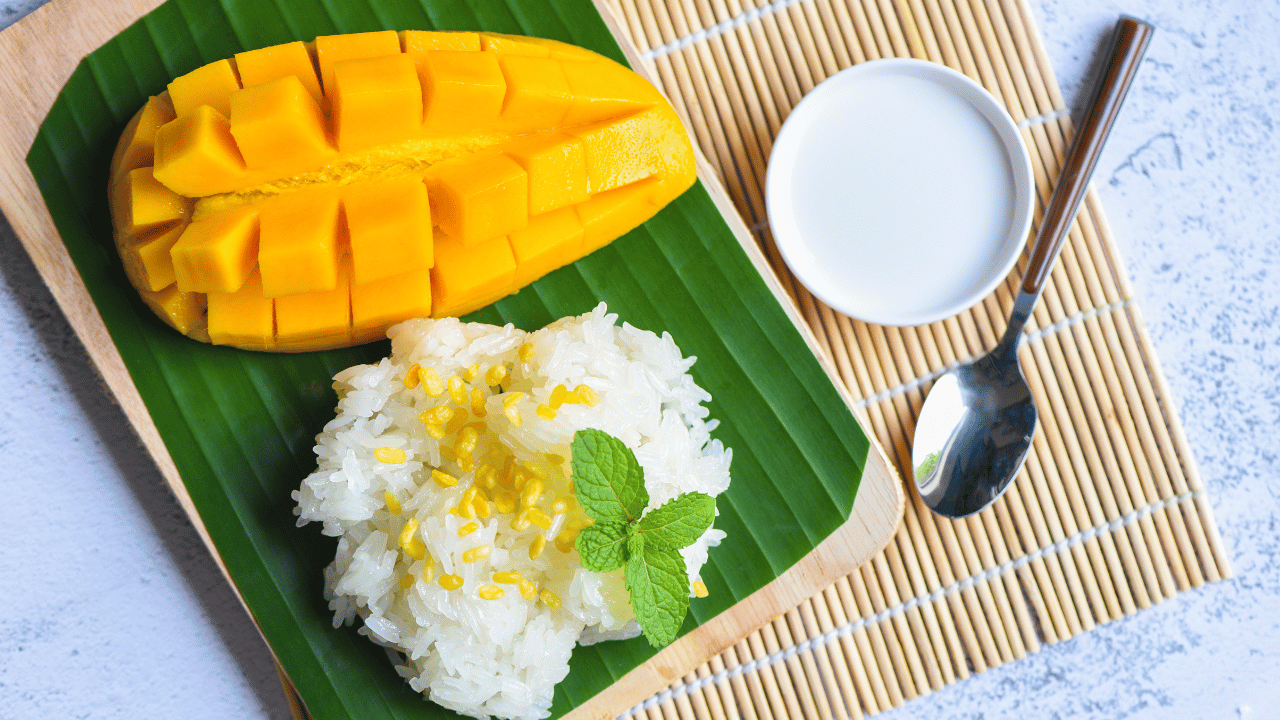
To enhance richness, a thicker coconut cream sauce is often drizzled over the rice before serving. This salted coconut sauce deepens the flavor profile, adding a luxurious finish. Its slightly savory undertone cuts through the sweetness, reinforcing the Thai principle of balance.
The sauce also adds visual appeal. A glossy white drizzle against golden mango slices creates contrast, making mango sticky rice as beautiful as it is flavorful.
4. Crispy Mung Beans
For texture, toasted mung beans are sprinkled on top. These tiny golden bits provide crunch, contrasting with the soft rice and silky mango. Though small in quantity, they contribute an important sensory element.
The crispiness introduces complexity, ensuring that mango sticky rice offers more than just sweetness. It becomes a layered experience—chewy, creamy, juicy, and crunchy all at once.
Mango Sticky Rice in Thai Food Culture
Mango sticky rice is not merely a dessert; it is woven into Thai daily life and cultural identity.
Street Food Icon Status
In Thailand, mango sticky rice is widely available from street vendors, particularly during mango season. Vendors skillfully slice mangoes to order and assemble portions with practiced precision. Display trays often showcase neatly arranged mango halves, attracting passersby with their bright yellow color.
Its accessibility makes mango sticky rice a democratic dessert—enjoyed by locals, office workers, families, and tourists alike. The affordability and freshness contribute to its enduring popularity.
Role in Festivals and Celebrations
Mango sticky rice often appears at festivals and family gatherings, especially during the hot season. Its refreshing nature makes it suitable for celebrations when heavier desserts might feel overwhelming.
Because mangoes symbolize abundance and prosperity in many Asian cultures, mango sticky rice can carry subtle symbolic meaning. Sharing it during gatherings reinforces communal enjoyment and seasonal appreciation.
From Local Markets to Modern Dining
Over time, mango sticky rice has expanded beyond street stalls into restaurants and upscale dining venues. Chefs reinterpret the classic presentation, experimenting with plating techniques and portion sizes while maintaining core flavors.
Some modern Thai restaurants present mango sticky rice in minimalist arrangements or incorporate it into tasting menus. Despite innovation, the fundamental identity of the dish remains intact.
Cross-Cultural Influence in Southeast Asia
Southeast Asia’s culinary landscape has been shaped by centuries of movement and exchange. Thailand and Vietnam, connected by geography and history, share many ingredients and flavor preferences. The journey of mango sticky rice from Thailand to Vietnam reflects how regional dishes can cross borders naturally and become part of a broader Southeast Asian food culture.
Culinary Exchange Between Thailand and Vietnam
Thailand and Vietnam share geographical proximity and long histories of cultural interaction. Trade routes, migration, and tourism have facilitated culinary exchange between the two nations.
As Thai cuisine gained international recognition, mango sticky rice traveled alongside popular Thai dishes. Vietnamese chefs and restaurateurs began introducing mango sticky rice to local menus, particularly in urban areas where diners are open to regional influences.
Vietnamese cuisine already embraces tropical fruits and coconut-based desserts, making mango sticky rice a natural addition rather than a foreign anomaly. The shared Southeast Asian palate eased its transition across borders.
Mango Sticky Rice in Vietnam
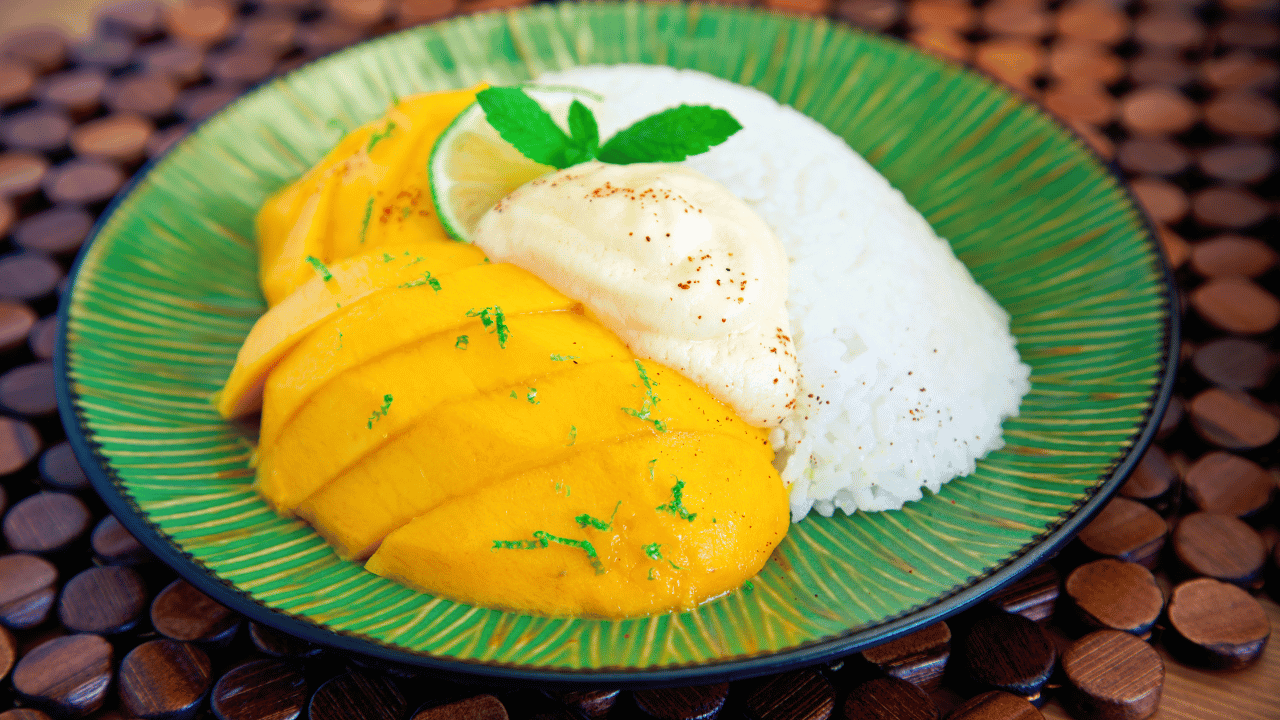
Mango sticky rice has steadily gained popularity in Vietnam, evolving from a Thai classic into a well-loved dessert within the country’s vibrant food scene. Although it is not originally part of traditional Vietnamese cuisine, the dish has been warmly embraced, particularly in urban areas where diners are open to regional flavors. Its tropical character and balanced sweetness make it a natural fit within Vietnam’s diverse and fruit-forward dessert culture.
Vietnamese Adaptation and Local Preferences
In Vietnam, mango sticky rice retains its essential structure but may reflect local taste preferences. Vietnamese diners often appreciate balanced sweetness, similar to Thai cuisine, yet subtle differences in mango varieties and coconut richness can create nuanced variations.
Some Vietnamese establishments adjust portion sizes or presentation styles to align with local dining habits. The dessert is frequently found in cafés, dessert shops, and fusion restaurants in major cities such as Ho Chi Minh City and Hanoi.
While not traditionally Vietnamese, mango sticky rice has found enthusiastic acceptance, especially among urban consumers who enjoy exploring regional specialties.
Cultural Integration in Vietnam
As mango sticky rice gained recognition beyond Thailand, it gradually found a meaningful place within Vietnam’s evolving dessert landscape. Its integration into Vietnamese food culture reflects the country’s openness to regional influences and modern dining trends. From youthful consumers to stylish cafés and the power of social media, mango sticky rice has transformed from an imported specialty into a familiar and visually celebrated dessert in Vietnam.
Popularity Among Younger Generations
Younger Vietnamese generations are highly receptive to international and regional food trends. Mango sticky rice appeals to them not only for its taste but also for its aesthetic qualities.
The bright mango slices and creamy coconut rice photograph beautifully, making the dessert popular in visually driven dining experiences. Its approachable sweetness suits contemporary preferences for lighter desserts.
Café Culture and Modern Dessert Trends
Vietnam’s thriving café culture provides fertile ground for mango sticky rice. Trendy cafés often include Southeast Asian-inspired desserts on their menus, blending tradition with innovation.
Some venues experiment with presentation—serving mango sticky rice in glass bowls, layered cups, or plated with decorative garnishes. These updates maintain the dish’s identity while adapting it to modern settings.
Social Media Influence on Mango Sticky Rice
Social media platforms play a significant role in popularizing mango sticky rice in Vietnam. Influencers and food bloggers frequently showcase colorful dessert spreads, and mango sticky rice stands out visually.
Its vibrant contrast of white rice and golden mango makes it highly shareable. As more diners post their experiences online, the dessert gains cultural relevance beyond its Thai roots.
Comparing Thai and Vietnamese Styles
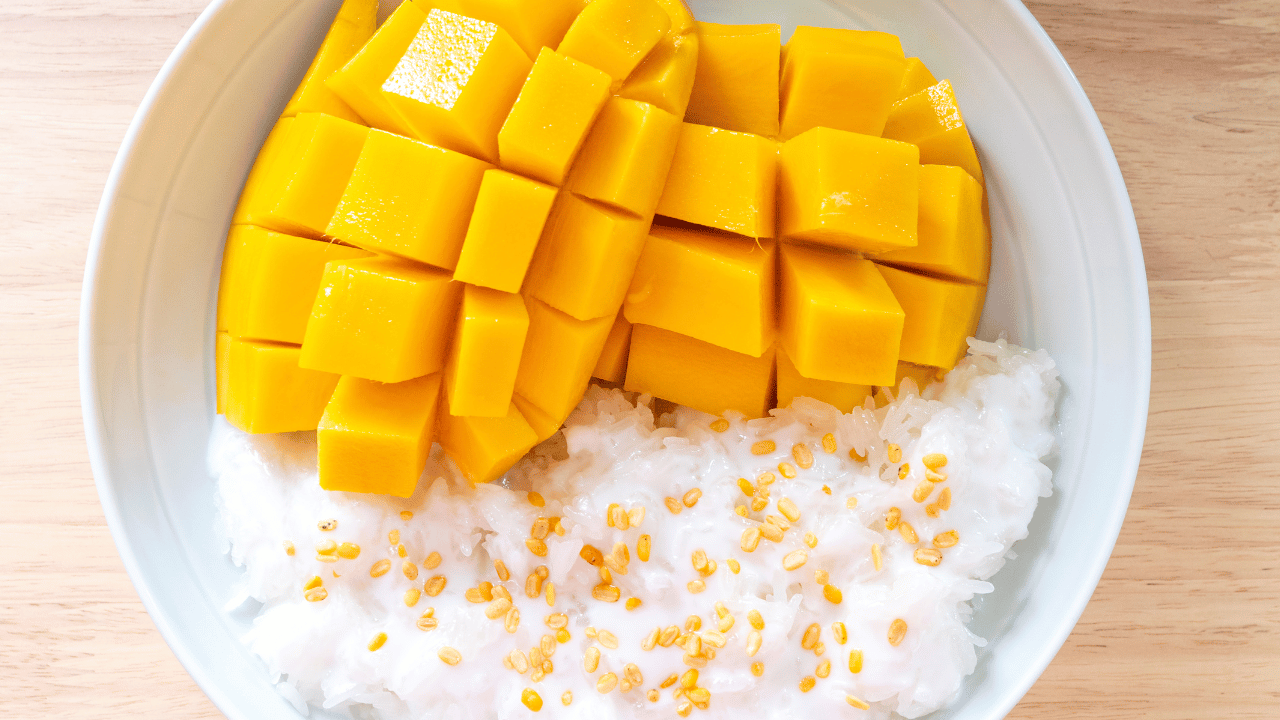
Though similar in foundation, mango sticky rice can differ subtly between Thailand and Vietnam.
Differences in Presentation
In Thailand, traditional plating often emphasizes simplicity: rice on one side, mango slices on the other, topped with coconut sauce and mung beans. The focus is on freshness and authenticity.
In Vietnam, presentation may lean toward contemporary aesthetics. Portions might be arranged more artistically, catering to café culture and social media trends.
Flavor Balance and Texture Preferences
Thai versions sometimes highlight a pronounced salty-sweet contrast in the coconut sauce. Vietnamese interpretations may adjust sweetness levels slightly to align with local preferences, though the overall flavor profile remains familiar.
The choice of mango variety also affects texture and aroma, contributing to subtle regional differences.
Dining Context and Consumer Experience
In Thailand, mango sticky rice is often enjoyed casually—purchased from a street vendor and eaten as a quick treat. In Vietnam, it is more commonly experienced in cafés or dessert shops, integrated into a broader dining outing.
This contextual difference influences how consumers perceive the dish: either as a traditional seasonal specialty or as part of a trendy dessert selection.
Mango Sticky Rice and Culinary Tourism
Mango sticky rice plays an important role in Southeast Asia’s culinary tourism landscape. In Thailand, it is frequently listed among must-try foods for visitors. Travelers seeking authentic street food experiences often prioritize tasting mango sticky rice during mango season.
In Vietnam, the presence of mango sticky rice demonstrates the country’s openness to regional culinary exchange. Tourists exploring Vietnamese cities may encounter the dessert alongside local specialties, reflecting Southeast Asia’s interconnected food culture.
For many visitors, tasting mango sticky rice in both Thailand and Vietnam offers an opportunity to compare cultural interpretations. The dish becomes more than a dessert—it becomes a lens through which travelers understand regional diversity and shared heritage.
Mango sticky rice’s journey from Thailand to Vietnam illustrates how food transcends borders while retaining identity. Its four harmonious components—sweet coconut sticky rice, ripe mango, salted coconut sauce, and crispy mung beans—form a foundation that adapts gracefully to new environments.
Mango sticky rice stands as both a Thai icon and a welcomed presence in Vietnam’s dessert scene. Its continued popularity among younger generations, café culture enthusiasts, and culinary travelers ensures that this tropical classic will remain a beloved Southeast Asian treasure for years to come.
FAQ
-
Mango sticky rice is a Southeast Asian dessert made with sweet coconut-infused sticky rice, ripe mango slices, salted coconut sauce, and crispy mung beans. It is best known as a traditional Thai dessert but is also popular in Vietnam and other neighboring countries.
-
Yes, mango sticky rice originated in Thailand, where it is called khao niao mamuang. It became a seasonal favorite during mango harvest season and later gained popularity across Southeast Asia, including Vietnam.
-
Mango sticky rice is loved for its balance of flavors and textures—sweet, slightly salty, creamy, and fruity. Its vibrant presentation and refreshing taste also make it especially appealing in tropical climates.
-
Yes, mango sticky rice is widely available in Vietnam, particularly in major cities. It is commonly found in cafés, dessert shops, and restaurants that feature Southeast Asian-inspired menus.
-
The best time to enjoy mango sticky rice is during mango season, when the fruit is at its sweetest and most fragrant. In Thailand, this typically falls during the hot summer months, though the dessert is available year-round in many places.
